

Why a Chaplain’s Presence Matters

The Ministry of Presence:

There is a quiet kind of ministry that rarely makes headlines and often goes unnoticed by everyone except the person who needs it most. It’s the ministry of presence, showing up, staying near, and bearing witness to another person’s story with compassion and steadiness.

For chaplains, presence is not merely a technique. It is the heart of the vocation.

Presence says, “you are not alone.”  Most people don’t remember the exact words a chaplain says. But they remember that someone was with them.

Presence disrupts isolation. It offers grounding when life becomes disorienting, whether at a hospital bed, a workplace, a fire station, a kitchen table, or a late-night phone call.

In a world that glorifies productivity and speed, presence gives something rare: unhurried attention.

This presence makes space for God.  A chaplain does not bring God into a room; God is already there. However, presence helps people notice God in the midst of their fear, grief, or confusion.

This is called the hiddenness of God; God at work beneath the surface of ordinary encounters.  I  believe that every Christian, in everyday life, could be a bearer of God’s comfort simply by living faithfully, humbly, and attentively.

A chaplain’s presence creates the conditions where the sacred becomes visible.

It is this presence that slowly builds trust.  Trust doesn’t come from impressive credentials or perfect answers.  It grows from consistency.

People open up when they know:

  • You are not rushing them
  • You are not judging them
  • You are not trying to fix them
  • You are not pushing an agenda

Presence communicates safety.  When people feel safe, they can speak truthfully about their doubts, their faith, their guilt, their hopes and in that honesty, healing begins.

This presence honors the dignity of every person.  Chaplains meet people in vulnerable moments—when defenses are low and emotions run raw. Presence honors humanity without demanding anything in return.

It says:

“Your story matters.
Your pain is real.
Your life has worth.”

This is holy ground.

Presence eliminates the need for the perfect words.  Many chaplains worry about what to say. But often the most faithful thing is to say very little.

A hand on a shoulder. A quiet prayer.  A gentle question.  A shared moment of silence.

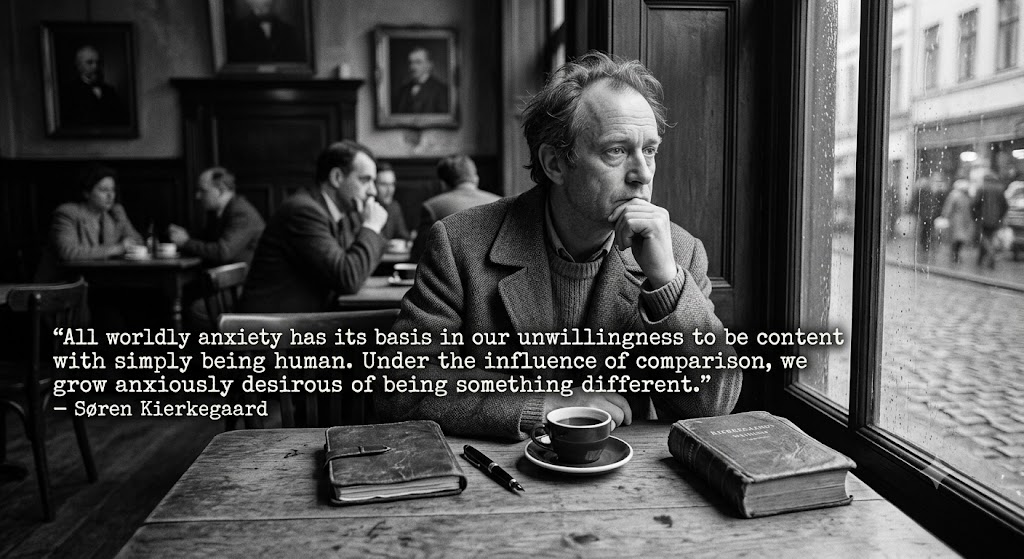
Kierkegaard reminds us that “purity of heart is to will one thing.”  In chaplaincy, that one thing is love and love expressed through attention, listening, and presence.

Christ’s ministry was deeply relational. He walked beside people, shared meals, entered homes, and lingered long enough to see people as they truly were.

Chaplains follow this pattern, not as saviors, but as companions.

Showing up is the most powerful way to make compassion real. It brings a sense of calm to someone’s hardest moments

A chaplain’s presence does not solve every problem. But it changes the atmosphere of suffering. It helps people breathe again.  It gives strength for the next step.

Presence is ministry.
Presence is compassion.
Presence is hope made tangible.

And sometimes the most sacred work a chaplain can do is simply to show up and stay.

Online Sound Bath

I have partnered with Desert Moon VST in promoting their online sound bath. If you need a break from the world, join us on May 29th from 6:00 p.m. to 7:30 p.m. Come relax and meditate with us.

Desert Moon VST’s write up:

An online gathering to collectively tap into the energy of the upcoming Blue Moon. This will be an introspective gathering supported through sound healing and optional guided journaling and reflection.

This is an online event, registration is required. A participant link will be emailed to the address provided upon registration. A replay link will be provided to all registered participants via email, available for one month.

Register Here

The Quiet Power of Presence

In a world that constantly pulls us toward the next task, the next notification, the next version of ourselves, presence can feel almost radical. We are trained to move quickly, to optimize, to anticipate. Rarely are we encouraged to simply be.

Yet presence is where life actually happens.

To be present is not just to be physically somewhere; it is to arrive fully. It is the difference between hearing someone speak and truly listening. Between going through the motions of a day and experiencing it as it unfolds. Presence is not passive; it is an active, intentional returning to what is here, now.

At its core, presence asks very little of us. It does not require special equipment, a perfect environment, or hours of uninterrupted time. It asks only for attention. A single breath felt complete. A moment of eye contact held without distraction. The sensation of your feet on the ground as you walk from one place to another.

And yet, despite its simplicity, presence can be profoundly challenging. The mind resists stillness. It wanders into memory, projecting into the future, narrating, judging, planning. This is not failure; it is the nature of the mind. Presence is not about eliminating thought, but about noticing when we’ve drifted and gently returning.

Again and again.

There is a quiet strength in this practice. Each return builds a kind of inner steadiness. Over time, we begin to notice space; space between stimulus and reaction, between emotion and response. In that space, there is freedom. We are no longer entirely at the mercy of habit or impulse.

Presence also changes how we relate to others. When we are fully with someone, even briefly, we offer something rare and deeply human: our undivided attention. In a culture of partial listening and constant distraction, this can feel like a form of care. It says, without words, “You matter enough for me to be here.”

For those in caregiving or chaplaincy roles, presence is not just a personal practice; it is the foundation of the work. You do not need to fix, solve, or even fully understand another person’s experience. Often, what is most healing is simply not leaving. Staying with someone in their joy, their grief, their uncertainty, without rushing them toward resolution.

But presence is not reserved for moments of intensity. It is equally available in the ordinary. Washing dishes. Sitting in traffic. Drinking coffee in the early morning light. These moments, so often dismissed as mundane, are actually the fabric of our lives. When we meet them with awareness, they become enough.

This does not mean life becomes easy or free from pain. Presence does not erase difficulty. What it offers instead is a different way of being with it. Pain, when met directly, is often more workable than the suffering created by resisting it. Presence allows us to feel without becoming overwhelmed, to experience without becoming lost.

There is no finish line in this practice. No moment when you are permanently present and never distracted again. Instead, there is a rhythm: noticing, returning, beginning again. Each moment is a new opportunity.

So perhaps the invitation is simple.

Pause. Take a breath. Feel where you are.  And, just for this moment, let that be enough.